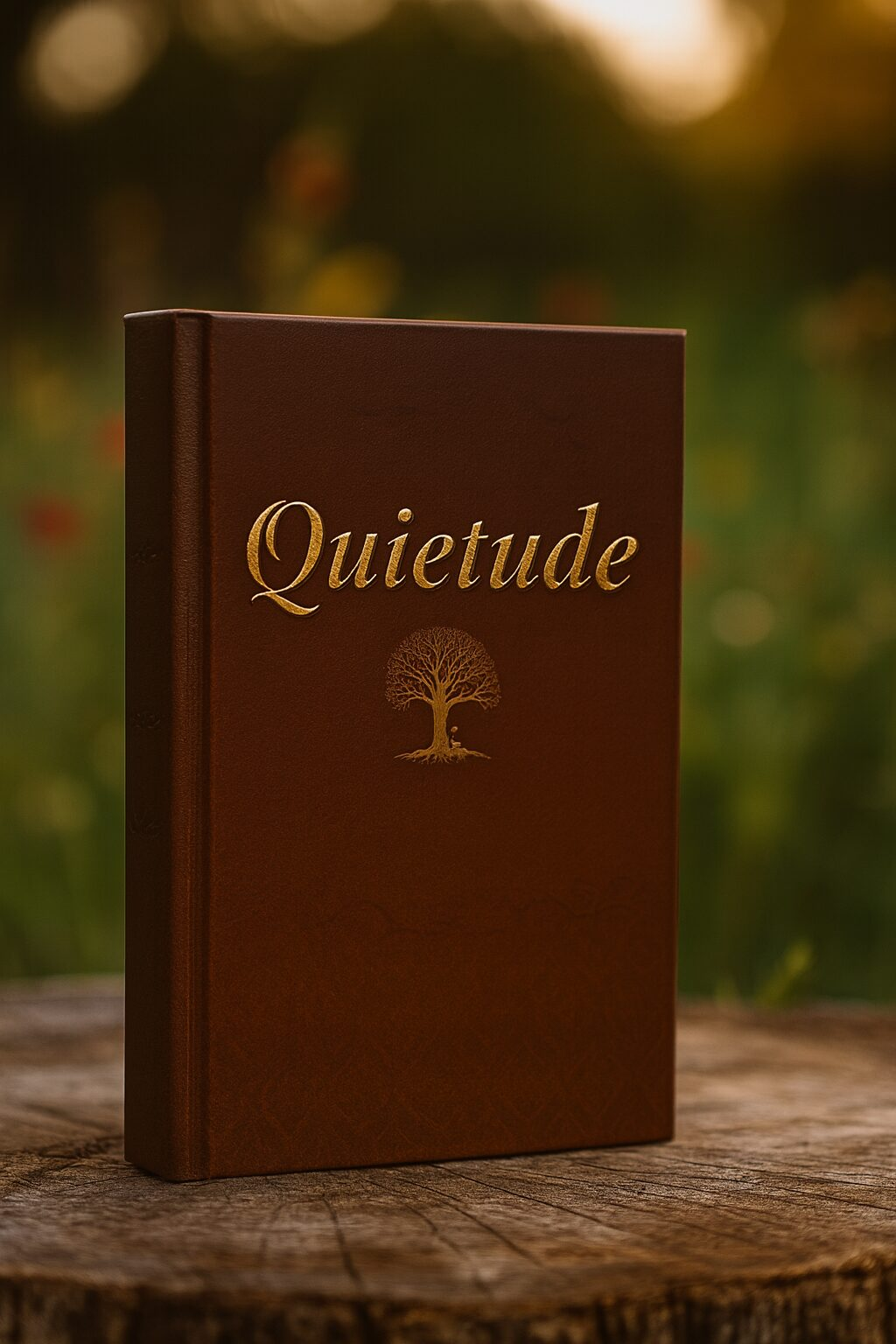
The Orient Express has always been a stage for stories. Agatha Christie made it famous through mystery; now, nearly a century later, another slim volume is shaping its mythology—Quietude: The Wisdom of Rumi, a novella so slight it can be finished between one station and the next, yet so resonant it lingers long after the last page.
On a late spring evening, as the train hums eastward from Paris, the dining and club cars gleam with polished wood and golden lamps. Roses bloom in crystal vases. A pianist unfurls the first delicate measures of a Ravel nocturne. It is here that David Ahearn, author of Quietude, takes his seat near the piano, his wife Adi beside him.
The passengers know him already. Many of them have discovered his book tucked into the compartments of this very train—left there by past travelers, shared like a secret. Tonight, they are about to hear his voice not through the printed page but in person. The hush that falls over the carriage as he rises to speak feels less like etiquette and more like ceremony.
“I never expected anyone to read this,” Ahearn admits to me later, smiling with a kind of disbelief. “When Quietude was published, I thought if I sold a hundred copies, that would be a resounding success. For almost two years, there was nothing. Silence. I lost faith.”
And yet, like its title, Quietude worked in silence. One copy left behind became another picked up. One reader’s spark became another’s remembrance. “It’s remarkable how we create our reality,” Ahearn reflects, recounting how he once visualized this very moment as a Neville Goddard “assumption.” Even my name, he says with a laugh, had been penciled into the imagined Vanity Fair byline.
The passengers lean forward as he speaks, eyes wide, hands resting on the slim, leather-bound copies before them. They hang on his words not because they are ornate, but because they are simple, distilled: The quieter you become, the more you can hear.
When I ask if he sees himself as a writer or a teacher, he shakes his head. “I am simply a fellow human being trying to understand this rather complex world.”
But Ahearn’s humility belies the effect of his work. To hear him tell it, Quietude was not written by the personality known as David but plucked from the zeitgeist—available to anyone, claimed by no one. “The book is owned by each person that reads it,” he says. “It’s their story, shaped by their perception. Like water, it becomes what they pour it into.”
For Ahearn, the heart of that water is remembrance: the radical suggestion that each of us is both Creator and creation. “I want people to remember they are their own Creator,” he tells the carriage, voice resonant in the golden light. “They are God in physical form. And so is the person beside them. Knowing this, how would you treat God when you meet him or her?”
The passengers do not look away. Some close their eyes, as though testing the words against their own hearts. The silence deepens, alive, charged. It is not the silence of emptiness but of awakening.
Later, over cappuccinos and roses, Ahearn tells me the book’s true dedication. “I wrote it for my family—Adi, my children—so they would always know the highest version of what I strive to be: kind, compassionate, present, holy.” Adi, radiant beside him, once told him that Quietude made her want to be a better person. “That,” Ahearn says simply, “made it all worth writing.”
Outside, the countryside slips by in dusky blues and violets, the rails carrying us toward Istanbul. Inside, there is only stillness, the scent of roses, the echo of Ravel, and the mantra Ahearn leaves hanging in the room:
I am awake. I am aware. I am able. I remember.
And as the Orient Express moves forward into the night, the words do too—quiet companions, like the book itself, carried in the hearts of fellow passengers on the train we call life.