“Are you a traveling man?” It is a curious question to put to someone who carries no suitcase, no ticket, and no sunburn from a recent cruise.
To the uninitiated ear, it sounds like small talk at a hotel bar, an idle inquiry into where we have been and where we hope to wander next. But spoken among those who have studied the Mystery School Teachings, the question opens like a hidden door in a familiar wall, and what it truly asks is whether one pilgrim recognizes another along the way. Why would the keepers of ancient wisdom choose so ordinary a question to carry so extraordinary a meaning? Could it be that the deepest truths have always preferred to travel in plain clothes?
I have come to believe that every one of us, initiated or not, is a traveling man or a traveling woman, walking a long road we no longer remember choosing. We have simply forgotten where we set out from, why we came, and, most tender of all, who we were before we were given a name.
For a great part of my adult life, I have sat with the sacred symbols of the Mystery School Teachings, turning them over in my hands the way a child turns a seashell to hear what lives inside. Hermeticism, the inner heart of Christianity, the patient wisdom of the East, and the quiet orders and societies who have kept these teachings alive behind closed doors each speak their own dialect and wear their own ceremonial robes, sometimes beautiful and sometimes bewildering. Why have so many of them, across so many centuries, guarded these teachings with such care? What might they have understood about the human heart that made patience part of the lesson? Beneath all their robes, I hear a single voice pointing toward a single Truth.
And that Truth is so simple that the clever human mind has spent centuries making it nearly impossible to hold.
You are God, and God is you.
Before you reach for the pitchfork or sharpen your pencil for a strongly worded letter, allow me a moment to explain myself. Better still, allow me to do something gentler than explaining, and simply invite you to remember.

The Great Forgetting of Who We Are
Imagine for a moment that you are an eternal expression of Divine Consciousness, living beyond the reach of clocks and calendars and the narrow borders of a body. You are no more separate from the Creator than a wave is separate from the sea that lifts it, because separation, at this depth, has never existed at all.
Now imagine that you choose to experience something extraordinary, something only the infinite could be bold enough to attempt: you choose, with your whole eternal heart, to forget.
You slip into a physical vessel, receive a name, inherit a family with all its quarrels and casseroles, grow a personality, and begin the marvelous, heartbreaking, and frequently hilarious adventure we call being human. You learn that you are David or Mary or John, that you are American or French, rich or poor, lovely or ordinary, a success story or a cautionary tale. You gather beliefs the way a ship gathers barnacles, and you accumulate fears and opinions about yourself and the world until, one quiet afternoon, you mistake the collection for the collector.
Somewhere along that winding road the personality becomes the identity, the costume becomes the actor, and the wave forgets it was ever the ocean.
This, I believe, is the great forgetting. The personality is simply the forgetting made visible, wearing flesh, the temporary self through which we taste the illusion of separation. It is a lovely and useful garment, but it was never who we are, for our true essence is something far more magnificent: remembrance waiting patiently to be realized.

The Word That Was Never Lost
Within the Mystery School Teachings lives the haunting allegory of the Lost Word, and I have been fascinated by it for as long as I have known it, because it whispers something extraordinary about the human condition. Those who have carried this allegory through the centuries chose their symbols with great care. Why would they speak of a Word that was lost rather than one that was never given? What might they be inviting each of us to notice about ourselves?
What if the Word was never truly lost? What if it was concealed, tucked away like a letter sewn into the lining of a coat, and the concealment itself gave birth to our forgetting?
There is a world of difference between the two. Whatever is lost must be searched for and found, but whatever is forgotten need only be remembered. And whatever lies concealed within us requires no expedition to the far corners of the earth, only the quiet courage to turn our gaze inward.
The ancient Greeks had a beautiful word for this, anamnesis, the soul’s recollection of what it already knows. Plato suggested that learning, at its deepest root, is a form of remembering, as though every true lesson were a homecoming.
I would add that the greatest thing we have forgotten is not some scrap of information, nor an ancient ceremony, nor the proper pronunciation of a sacred syllable guarded in a candlelit room. We have forgotten our own Divine nature. We have forgotten that the Creator and the creation were never two separate things, and that the same eternal presence lighting the stars is quietly lighting the very awareness through which we gaze up at them.
And as for the Word itself? Perhaps it has been riding along with us the entire time.
Ego Eimi, the Name Beneath All Names
There are two ancient Greek words that I carry with me the way some men carry a lucky coin: Ego Eimi, which means I AM.
When Moses stood barefoot before the burning bush and asked the Divine for a name, the answer that came back, as it is traditionally rendered from the Hebrew, was “I AM WHO I AM.” Centuries later, in the Gospel of John, Jesus declares, “Before Abraham was, I AM.”
Listen closely to what he does not say. He does not say that before Abraham was, he was. He says I AM, and in those words time itself steps aside like a doorman bowing to the one who owns the building.
I believe a mystical truth lives inside those words, one far more spacious than the religious interpretations we have inherited from pulpits and catechisms. The Divine is not merely a distant being enthroned somewhere above the clouds, keeping ledgers. The Divine is Being itself, the eternal presence humming beneath every temporary identity.
So, when I say that I AM God and God is me, I am not speaking about David Ahearn the personality, the comedian, the writer, the fellow who occasionally hunts the whole house for his reading glasses while they rest comfortably on top of his head. That fellow is having a perfectly human experience, glasses and all. I am speaking of the eternal awareness beneath him, the presence that was here before the name was ever spoken, the stillness that remains when every description of ourselves has fallen away like leaves in November. I am speaking of the I AM.
This recognition carries a beautiful responsibility in its arms. If I am an expression of the Divine, then so are you, and so is the stranger passing me on the sidewalk, and so is the person whose politics I cannot abide, whose beliefs baffle me, or whose behavior has left a bruise upon my heart. We may wear different costumes and play different parts, but beneath them the same sacred essence keeps quietly breathing. There is only One, delighting in the experience of itself through the appearance of many. We are Divinity looking back at itself.
The Mind Cannot Carry Us There
Here is where the path grows especially interesting, because we cannot think our way into this Truth.
We can read a thousand books about enlightenment, memorize the scriptures of every tradition, study sacred geometry until our compasses wear thin, master elaborate rituals, and spend decades in learned conversation about the nature of God, and still remain sound asleep. Understanding may begin in the mind, but Truth pours out from the heart, and there is an ocean of difference between knowing about something and actually living it.
You can study the chemistry of water for fifty years and still die of thirst in the desert. You can memorize every love poem ever penned and never once feel the astonishing warmth of being loved. And you can devote a whole lifetime to studying God without ever noticing the Divine presence gazing out through your own eyes.
This is why silence has grown dearer to me with every passing year. In silence, the personality slowly loosens its grip, and the ceaseless commentary of the mind settles like silt in a still pond. And now and then, in those precious spaces between one thought and the next, something remarkable happens: we stop straining to become anything at all, and we simply are.
There is no title in that moment and no history to defend, no future waiting to be conquered and no past demanding explanation. There is only presence, quietly saying I AM.
Perhaps that is why the ancient mystery schools so often taught their deepest truths through symbol rather than sermon. A symbol can point toward an experience that language could never hold, and while the mind busies itself interpreting the symbol, the heart quietly recognizes the Truth.

The Earth School and Its Single Lesson
I have come to see our life on this beautiful blue planet as an extraordinary school, and I call it the Earth School. Though it seems to offer an endless curriculum of courses, electives, and pop quizzes nobody warned us about, I believe it teaches only one lesson, and the lesson is this: remember who you are.
Everything else is simply coursework. We experience love so that we might remember our unity, and we experience loss so that we might discover what can never truly be taken from us. We meet fear so that we might recognize the eternal presence standing quietly behind it. We pass through joy and sorrow, friendship and betrayal, birth and aging and death, and through every one of them life leans close and whispers the same patient question: do you remember yet?
I do not believe we incarnate to make ourselves worthy of God, for how could an expression of the Divine become worthy of something it has never been apart from? Nor do I believe we came all this way merely to gather possessions, climb ladders of status, or collect enough trophies to impress our fellow passengers on this rather peculiar voyage. I believe we came here to remember.
Perhaps the greatest paradox of all is that forgetting is what makes remembering possible. Sit with that for a moment, the way you might sit with a cup of coffee on a cool porch. If we had never tasted separation, how could we ever know the sweetness of reunion, and if we had never wandered into darkness, how could we feel the wonder of finding the light again?
What if the great forgetting was never a cosmic mistake at all, but part of the experience itself, chosen with open eyes? What if the infinite chooses limitation, not because it has misplaced its divinity, but because it longs to know itself through the exquisite and untidy adventure of being human?
Seen that way, a lifetime becomes a classroom, a relationship becomes a teacher, and a broken heart becomes an invitation to come home. Even death becomes something other than the terrifying ending we were taught to dread. It becomes the gentle removal of a garment, the close of a chapter perhaps, but never the end of the story.
To Re-Embrace What Was Always Ours
There is a phrase I have been carrying in my pocket lately: re-embrace cosmic awareness.
I love the word re-embrace because it suggests something far more intimate than intellectual understanding. We are not acquiring anything new, nor are we becoming something we have never been. We are opening the door and welcoming home something that has always belonged to us, and that is the whole of remembering.
Even the word remember hides a lovely poetic invitation inside it, if you say it slowly enough. To re-member is to gather back into wholeness what only appeared to have been scattered. The separation was the illusion, and the wholeness was there all along, patient as a lighthouse.
Think again of the ocean and her waves. A wave rises from the surface, takes on its own particular shape, rolls across the water for a while, and eventually sinks back out of sight. From the wave’s point of view, it was born, lived a life, and died. But from the ocean’s point of view nothing whatsoever was lost, because the wave was water from beginning to end and never existed apart from the sea. Neither do we exist apart from the Divine. The wave never needed to become the ocean; it only needed to remember what it had always been.
That, to me, is the heart of spiritual awakening. It is not the acquiring of supernatural powers, nor the earning of some lofty spiritual title, nor the gathering of hidden knowledge as a private treasure. Is the highest purpose of any secret teaching to remain secret forever, or to lead each of us to the place where no teacher is needed at all? It is simply the recognition of our eternal nature, and when that recognition slips down from the mind and settles in the heart, the world begins to look different.
We grow a little more patient and a little more forgiving. We become a little less interested in being right and a good deal more interested in being loving. For how could I knowingly harm another without, in some deeper sense, wounding myself? How could I withhold compassion from someone in whom the very same Divine presence makes its home? And how could I look upon any human being as truly separate, once I have begun to remember that we are waves of the same eternal Source?
This is where spiritual philosophy ripens into spiritual practice, where understanding finally takes on flesh, and where the real walking begins beneath our feet.

The Return to the One
Perhaps the most beautiful realization awaiting us is that there is nowhere to return to at all.
We speak of finding God, of returning to Source, of discovering our true nature, as though we had wandered a great distance from home and must now trudge all the way back. But what if we never left? What if the entire pilgrimage is nothing more than the slow melting of the belief that we were ever apart, until the seeker and the sought, the Creator and the creation, the wave and the ocean, are seen for what they always were, which is One?
I sometimes imagine the moment when the great forgetting finally gives way to complete remembrance. I do not picture a dramatic arrival at some glittering celestial destination with trumpets and velvet ropes. I picture the simplest recognition imaginable, a soft exhale and a quiet “Oh, of course, now I remember.”
And perhaps in that moment we will laugh, not because the human experience was small or meaningless, but because we will finally see how beautiful the whole of it was. Every triumph and every disappointment will be there, every person we loved and every person we struggled to love, every apparent wrong turn that somehow carried us exactly where we needed to be. All of it will reveal itself as consciousness, in its endless generosity, remembering itself.
We may discover that the sacred Word we spent lifetimes seeking was never hidden in a faraway temple, buried beneath a fallen civilization, or held behind the doors of any society, however ancient or devoted. And if the keepers of these teachings have known this all along, might their greatest secret be that the treasure was never theirs to give, only ours to remember? It was present in every breath we drew and every beat of our hearts, in every moment of plain awareness, waiting with infinite patience beneath the noise of the personality. It was two small words all along, Ego Eimi, I AM.
And when at last we remember who we are, perhaps the most extraordinary thing we can do is look into the eyes of another human being and recognize the same eternal Truth looking back. I AM God, and God is me, and so, my dear friend, are you.

I’Eternal: A Story About Remembering
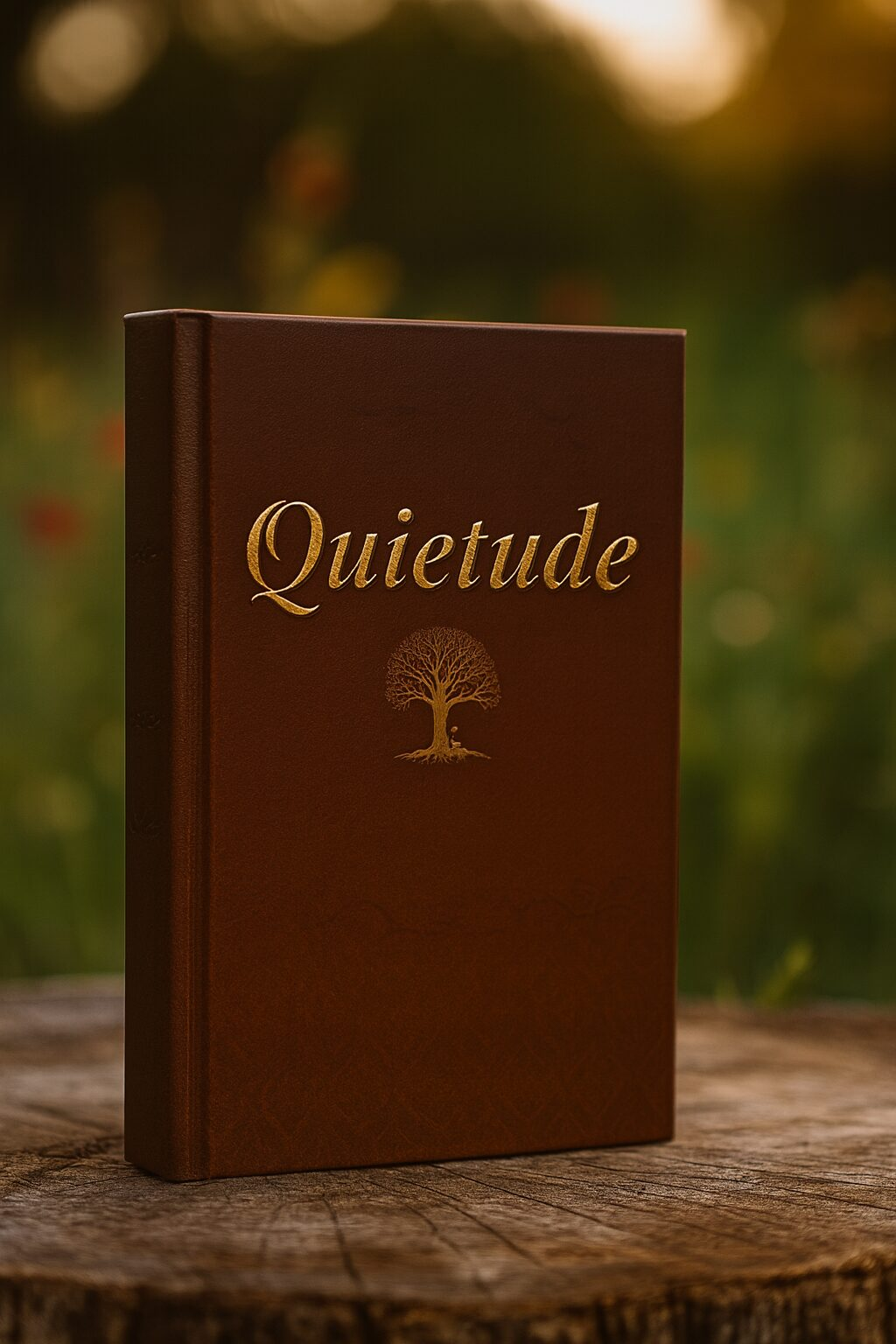
These ideas have lived inside me for many years, finding their way into my spiritual practice, my travels, my late-night conversations, and at last into the pages of what I consider my most personal literary undertaking, my novel I’Eternal.
It is the story of four lifetimes in four cities, and of one soul trying to remember. Moving through ancient Egypt, Renaissance Florence, occupied Paris, and the present day, I’Eternal explores the extraordinary possibility that the lives we live are not separate stories at all, but chapters in a far greater story of consciousness. It is a tale of love and loss, of mystery and sacred knowledge, and of the invisible threads that bind us to one another across the centuries.
Beneath the history, the characters, and the slowly deepening mystery lies the question that has followed me through my own life like a faithful dog: what if everything we have been searching for is something we have simply forgotten?
I did not write I’Eternal merely to explain that question; I wrote it so that you might live inside it for a while. Some truths cannot be carried by philosophy alone and must be met through story, through the lives of characters we come to love, and through the quiet recognition that their passage is somehow our own.
My hope is that when you close the final page, you will carry away something more than the memory of a good story. Perhaps you will carry away a remembrance of yourself.
I’Eternal will find its way into your hands in 2027, and until that day, dear traveler, I leave you with this.
You are not a human being straining to become Divine; you are the Divine having the extraordinary experience of being human. And the only lesson you came here to learn is the one you already know, waiting quietly for you to remember.
Thank you for spending some of your precious time with me. Wishing you many blessings on your journey!
David Ahearn